What Happens After You Order a Scanner From AECT
Behind the scenes of AECT's delivery process: manual QA, firmware flashing and bracket install before every unit ships, plus guided, remote and in-person onboarding anywhere in Australia.

One of our big delivery days in July 2026: 6+ units out the door in a single day, plus one mystery monster AI workstation. It looked, from the outside, like a stack of boxes on a loading pallet. What it actually represents is a process I want to explain properly, because it is the part of buying reality capture hardware that almost nobody talks about before they hand over a purchase order.
If you are weighing up a scanner purchase, you already know what the brochure says. What you probably do not know is what happens between the moment you say yes and the moment you are standing on site capturing usable data. That gap is where most hardware buying experiences quietly fall apart. So here is exactly how we run it.
Inside an XGRIDS delivery day — from unboxing to on-site handover.
Every unit passes through our hands before it ships
We do not drop-ship. Nothing goes from a warehouse shelf straight to your door with a courier label slapped on it. Before any unit leaves us, it goes through the same three steps, every time, no exceptions:
- →Manual check of the unit and everything in the case, done by hand rather than trusting a packing list
- →Latest firmware flashed on every scanner, so you are not starting your first job on a build that is months behind
- →Brackets installed personally by me, so the gear is assembled and ready to go the moment you open the box
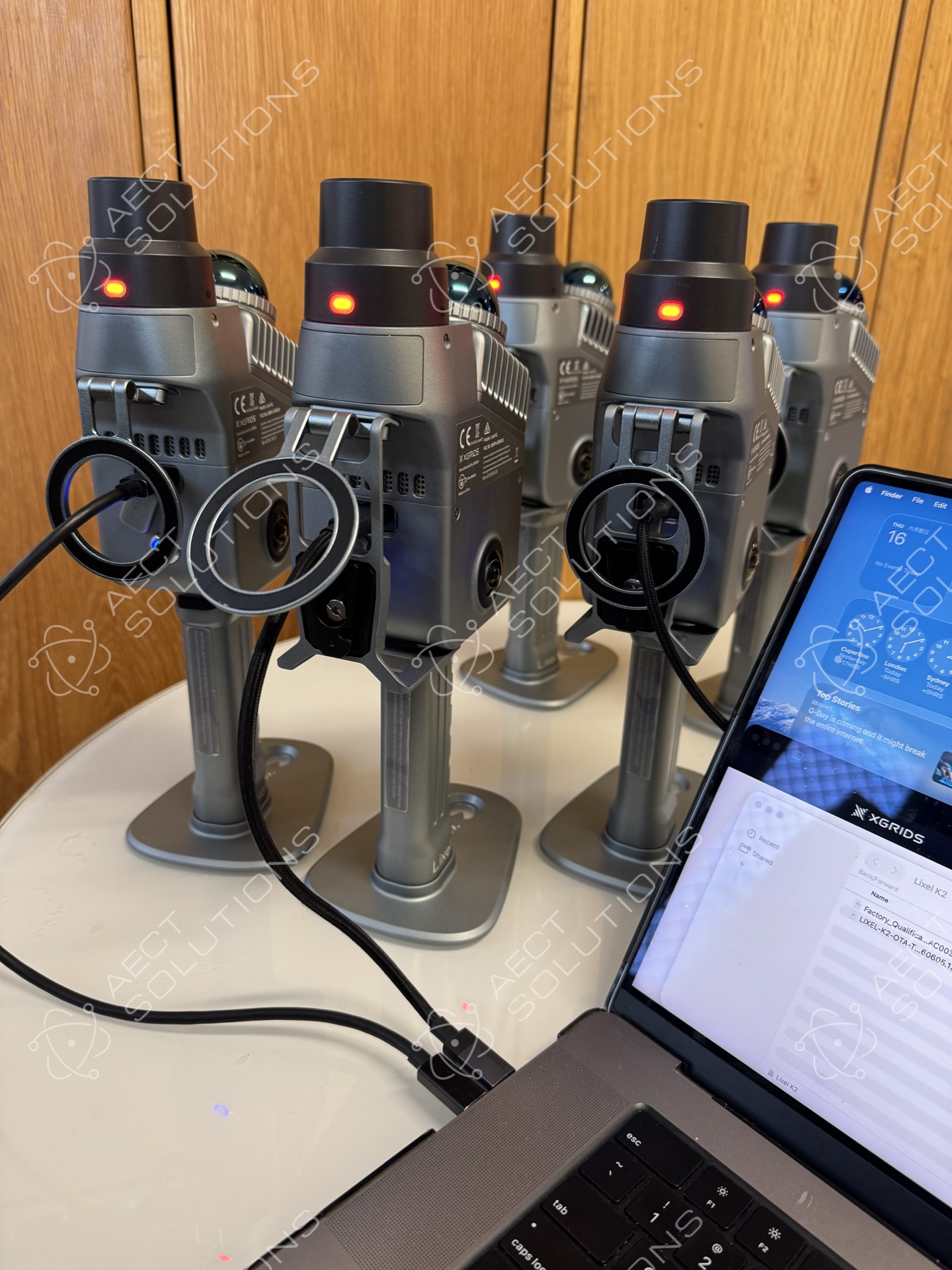
Every K2 charged, firmware-flashed and queued before it goes anywhere near a box.
That last one sounds small. It is not. The difference between a box of components and a working scanner is often twenty minutes of fiddling with mounts on a live site, in the sun, with a crew waiting on you. I would rather absorb that time here in the workshop than have you discover it on day one.
When you open the box, it is ready to rock and roll. That is the standard we hold ourselves to on every single unit.
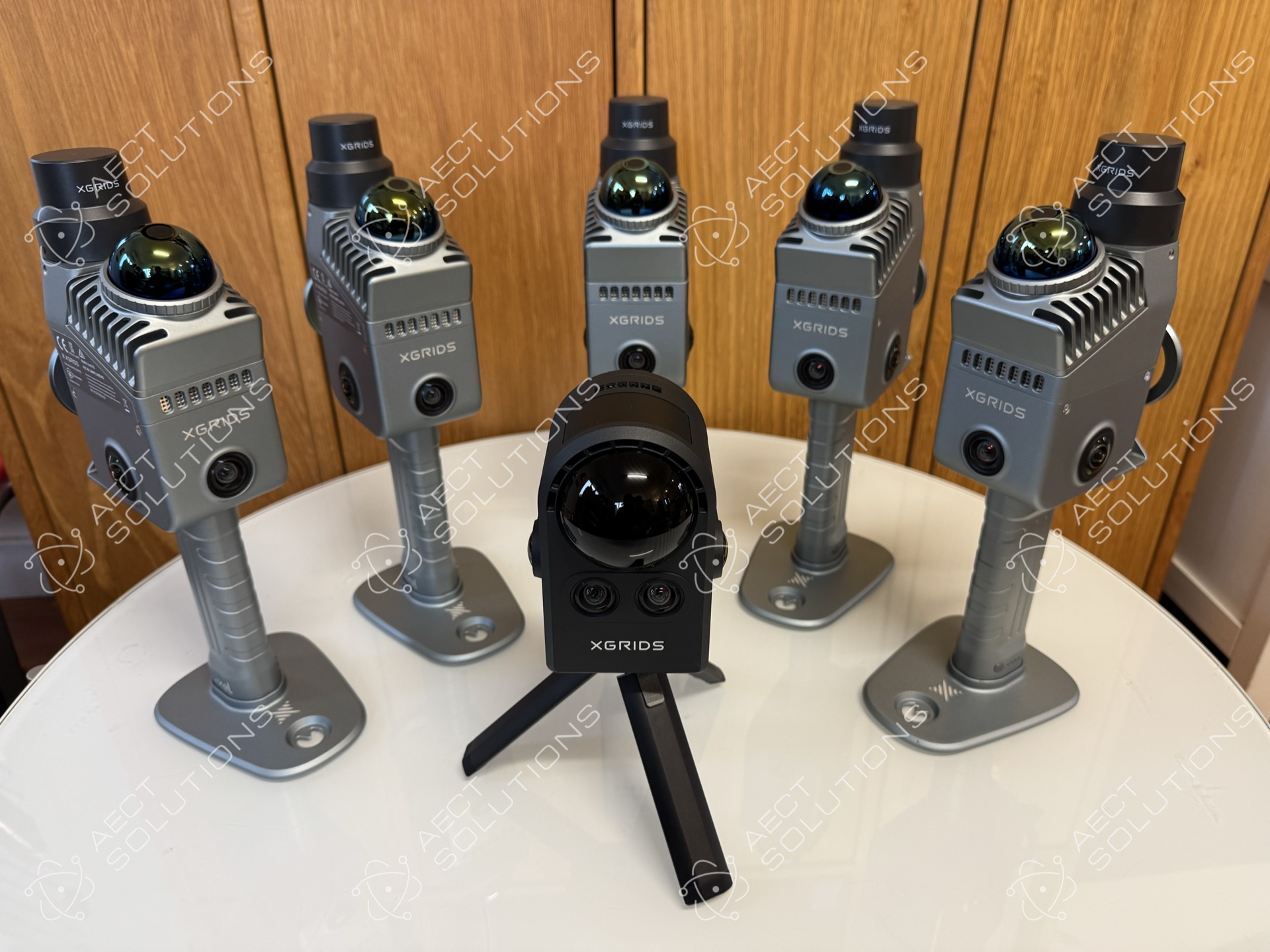
Staged and ready — one of AECT's 6+ unit delivery days.
Three ways to get onboarded, and you pick
Hardware that sits in a cupboard because nobody had time to learn it is the most expensive hardware there is. So we have built out a guided onboarding procedure for each product in our range, and we have deliberately made it flexible rather than one-size-fits-all.
Self-guided onboarding
Each product now has its own structured, step-by-step onboarding path you can work through at your own pace. Some teams genuinely prefer this. They want to unbox it on a Friday afternoon, follow the sequence, and be capturing on Monday without booking anything with anyone.
Complimentary remote onboarding session
The self-guided path is backed by a complimentary remote onboarding session. This is where we walk through the workflow live, answer the questions that only surface once the gear is in your hands, and make sure the processing side of things is set up correctly before you commit real project time to it.
In-person, anywhere in Australia
You always have the option of having us there in person. Not to do a scripted product demo, but to understand your problems and pain points first-hand, optimise the workflow around your actual needs, and pass our knowledge on to your team. Anywhere in Australia. This is where the real value transfer happens, because your site conditions, your deliverables and your existing digital twin or modelling pipeline are never quite the same as anyone else's.
Which is exactly what we are doing next week
We are spending all of next week in Victoria, onboarding clients right across the spectrum: an AI and simulation company, government agencies, professional tradies, engineering companies, and most importantly our partners down there.
I find that spread genuinely useful to think about. An AI and simulation team cares about data density and how the output behaves inside their engine. A government agency cares about repeatability, records and who can operate the gear when staff change over. A tradie cares about whether it works in the rain and how fast they can get an answer out of it. An engineering firm cares about accuracy and what the deliverable looks like when it lands in their existing workflow. Same hardware, four completely different definitions of success, and we tune the 3DGS and point cloud workflow accordingly for each of them.
You cannot do that from a help desk in another state. You do it by standing on their site.
Why we operate this way
That is what we are building at AECT. Not another hardware distributor. A knowledge-transfer company that happens to ship boxes.
The distinction matters commercially, not just philosophically. A distributor's job finishes when the invoice is paid. Ours finishes when your team can run the workflow without us. Those two business models produce very different post-sale experiences, and you can usually tell within the first fortnight which one you have bought into.
It is slower on our side. Flashing firmware, checking units by hand, fitting brackets, driving interstate to sit with clients, none of that scales elegantly on a spreadsheet. But it is why our clients get productive quickly instead of six months later, and it is why we are comfortable being judged on outcomes rather than on unit volume.
That is the AECT confidence.
Frequently Asked Questions
What does AECT's onboarding process include when I buy a scanner?
Every unit is manually checked, flashed with the latest firmware and has its brackets installed by us before it ships, so it arrives ready to use. You then get a guided onboarding procedure specific to your product that you can follow at your own pace, backed by a complimentary remote onboarding session. On-site onboarding anywhere in Australia is also available if you want us there in person to tailor the workflow to your projects and train your team directly.
If you are evaluating reality capture hardware and want to know what the first month actually looks like rather than what the spec sheet promises, get in touch. I am happy to talk you through the process, including the parts that are hard work.
Related Articles
Talk to Our Team
Every article is backed by real project experience. Book a discovery call and let's discuss your specific project.