Unboxing Australia's first Lixel L3: what's in the case, and a first scan processed on the device
The first Lixel L3 in Australia is out of the box: what ships in the Standard Package, what happens at first power-on, and what it means that the first scan was processed and georeferenced on the device itself. Plus the roadshow dates.
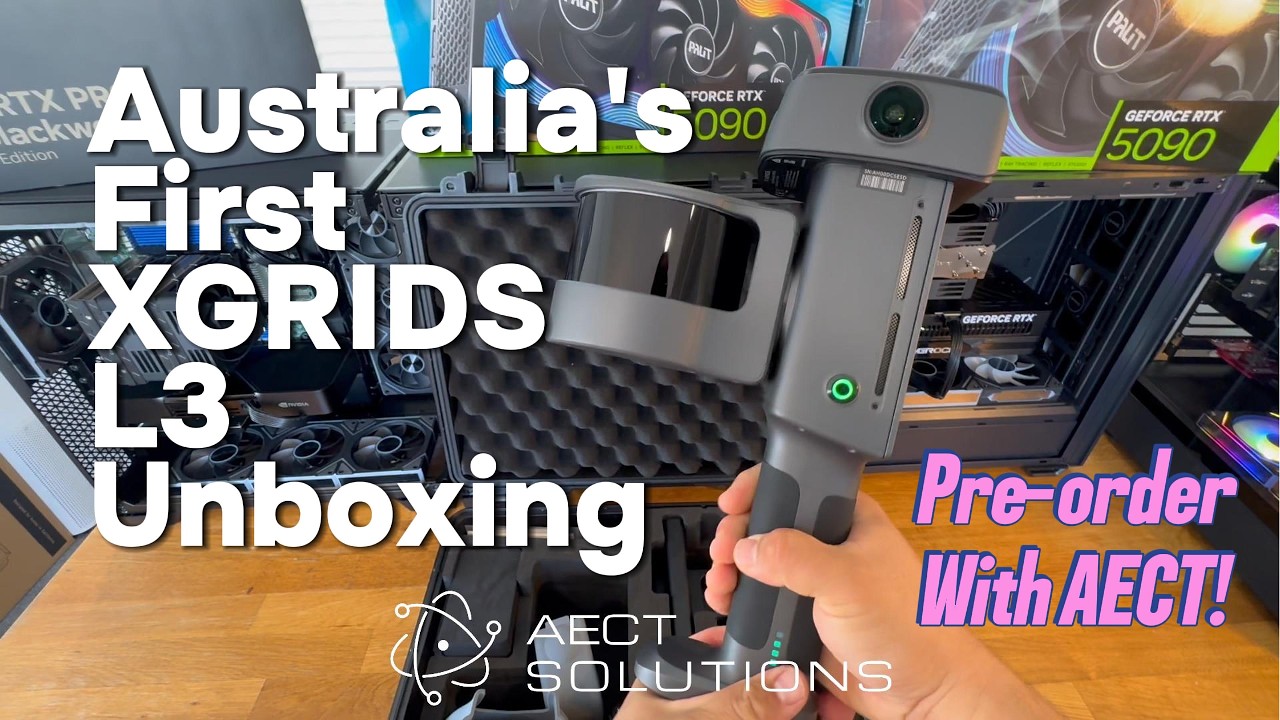
The first Lixel L3 in Australia landed on my bench on the morning of 22 September, one of nine first-batch units in the world and the only one in Southeast Asia and Oceania. I filmed the whole thing, from cutting the carton to checking the first scan on the unit's own screen. The video is three minutes. This post is the written version, for the people who want to know exactly what is in the case and what the first scan showed.
Key facts
The XGRIDS Lixel L3 is a handheld SLAM LiDAR scanner launched on 15 September 2026 that delivers 5 mm relative and 2 cm absolute accuracy with a built-in survey-grade RTK receiver, three 1/1.3-inch 4K HDR cameras and on-device processing, producing a true-colour point cloud, a photorealistic 3D Gaussian Splatting scene and a mesh from a single walk. In Australia the Lixel L3 is sold, demonstrated and supported by AECT Solutions, the XGRIDS National Distributor, with pre-orders open, October 2026 delivery and pricing on enquiry.
- →Unit in the video: Lixel L3, 32-channel / 120 m, Standard Package. The first L3 in Australia (arrived 19 September 2026) and one of nine first-batch units worldwide.
- →Accuracy: 5 mm relative (1σ) and 2 cm absolute with the built-in RTK; validated by XGRIDS across 7 units, 20 scans and 1,524 distances against a total station.
- →On the device: 4.3-inch 1,000-nit screen; processing and georeferencing on the unit, no laptop, no upload.
- →Australia: pre-orders open, AU$2,000 deposit, October 2026 delivery, pricing on enquiry, through AECT Solutions, the XGRIDS National Distributor.
- →Roadshow: Sydney 28 September to 3 October (confirmed), Melbourne 12 to 14 October (to be confirmed), every other capital by registration, regional centres on demand.
Case open to georeferenced point cloud, processed on the device. Recorded 22 September 2026 at the AECT office.
What's in the case
The unit is the 32-channel / 120 m configuration, in the Standard Package. Everything below came out of one hard case with backpack straps built in (they come off if you would rather carry it by hand).
- →Lixel L3 scanner, 32-channel LiDAR, 0.7–120 m range, 640,000 points per second
- →Two batteries, about 100 minutes of scanning each; you swap between scans
- →The charger: a 3-bay charging hub with a 45 W USB-C adaptor, as shipped with the first unit
- →The ground control plate, plus lens and LiDAR protective covers
- →30 reflective targets for accuracy checks
- →Type-C cable and the quick-start cards
- →Software: three permanent LixelStudio licences and LCC Basic, activated with the unit
That is a complete handheld kit on day one. The support rig, extension pole, vehicle and drone mounts are separate, and we quote them with the configuration.
First power-on
The L3 is the first Lixel scanner with a screen: 4.3 inches, 1,000 nits, readable in full sun. It changes the workflow more than any single spec. Language, GNSS configuration, storage, warranty and regulatory information all live on the device. You name the project, pick handheld, pick the scan mode, and hold it still while it initialises. In the video I moved during initialisation. I left that in, because most new owners will do it once.
One small thing worth doing before your first scan: sync the device clock. Ours arrived on UTC+8, so the first scan is time-stamped 08:37 for a scan that happened at 10:37 in Queensland.
The first scan, and why the on-device part matters
I walked one loop of the office. Live camera preview on the screen, control points added from the screen with the target height typed in, and the point cloud building in colour as I walked.
Then the part that separates the L3 from the L2 Pro and K2 workflow: stop the scan, and the unit processes it on board. It is georeferenced from the built-in RTK before you leave the site. No laptop, no upload, and the footage is real time, not sped up.
When it finishes you check the work on the same screen: RGB, elevation, intensity and quality views, viewpoints, clipping, measurement. If a corner is missing, you know before you pack up, not back in the office. On a job with a two-hour drive each way, that is the whole business case.
Two details for surveyors
The control-point tip sits at the base of the handle, so the L3 rides on a standard survey pole. Nothing proprietary to buy. And the battery clips in from underneath without tools.
The numbers, for reference
- →Relative accuracy 5 mm (1σ, XGRIDS 500 m² test); validated across 7 units, 20 scans and 1,524 distances against a total station at 4.2 mm P68 with no control points
- →Absolute accuracy 2 cm horizontal and vertical (RMSE, post-processed), 2.5 cm in real time on the device
- →Three 4K HDR 10-bit cameras on 1/1.3-inch sensors
- →About 2.5 kg with battery, IP54
- →Outputs: .las, .rcp, .e57, .ply point clouds, .obj/.osgb mesh, .lcc/.lcc2 3DGS, 3D Tiles
The full side-by-side with the L2 Pro and K2 is on the Lixel L3 page. Short version: the L2 Pro stays the long-range, vehicle and drone unit, the K2 stays the everyday sub-1 kg scanner, and the L3 is the precision handheld for teams delivering against an accuracy specification.
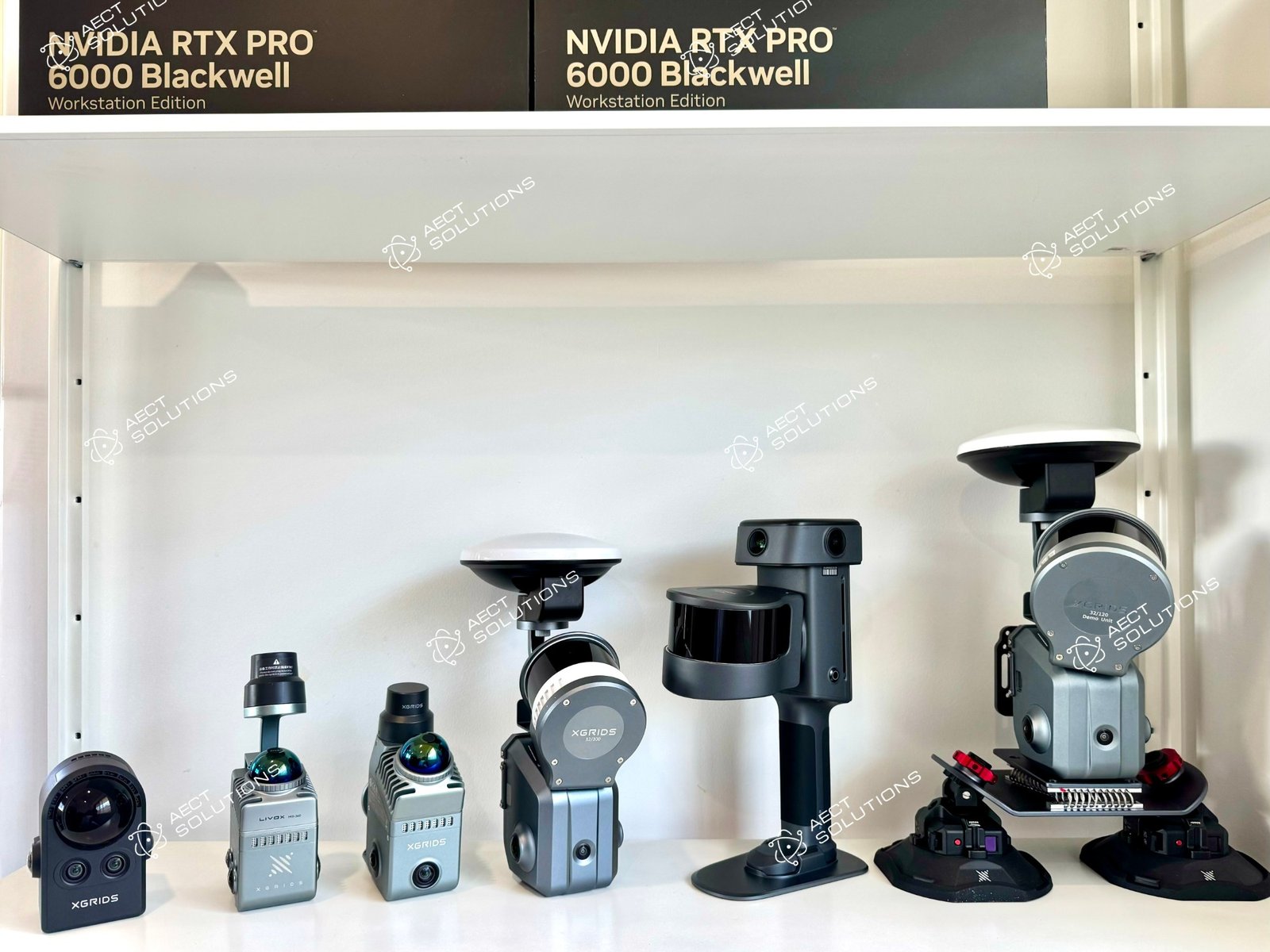
The whole range on the AECT shelf: PortalCam, K1, K2, L2 Pro 32/300 with RTK, the L3 in the middle, and an L2 Pro 32/120 on the vehicle mount. The L3 is the precision handheld; the L2 Pro keeps the range and the mounts; the K2 stays the everyday scanner.
Where to see it
From next week this unit travels with me.
- →Sydney: 28 September to 3 October (confirmed)
- →Melbourne: 12 to 14 October (to be confirmed)
- →Every other capital: scheduled by registration, regional centres on demand
Live scans, the L3 next to the L2 Pro and K2, hands-on time, and pre-orders on the day. Dates and venues go to registered contacts first. Register for your state.
Pre-orders
Pre-orders are open through AECT. An AU$2,000 deposit holds a first-shipment unit, with October delivery. Pricing is not published online; we quote your configuration after a short conversation, because the right answer depends on channel count, the software you already hold and whether you are moving up from an L2 Pro or K2. Pre-order or get the spec sheet.
Frequently asked questions
Is the L3 available for hire?
Not for now. The K2, L2 Pro and PortalCam are in the hire fleet; the L3 is demonstrated at the roadshow or on your site.
Do I need a laptop on site?
No. Processing and georeferencing run on the unit. LixelStudio and LCC on a workstation are for the deliverables: cleaning, coordinate transformation, mesh, 3DGS, exports.
What ships with a purchase?
The Standard Package above, three permanent LixelStudio licences, LCC Basic, and AECT onboarding, with the staged onboarding hub every AECT customer gets.
AECT Solutions is the XGRIDS National Distributor for Australia. Get in touch, or book a private demo.
Related Articles
Talk to Our Team
Every article is backed by real project experience. Book a discovery call and let's discuss your specific project.